Fully Automatic Filter Press: Working, Benefits & Uses
Fully Automatic Filter Press: Working, Benefits & Applications
Industrial filtration plays an important role in separating solids from liquids across various industries. A fully automatic filter press is an advanced filtration system designed to automate key operations, reduce manual intervention, and improve process efficiency.
It is widely used in wastewater treatment, chemical processing, mining, and other industries that require effective solid-liquid separation. In this blog, we will explore how a fully automatic filter press works, its major benefits, and its industrial applications.
What Is a Fully Automatic Filter Press?
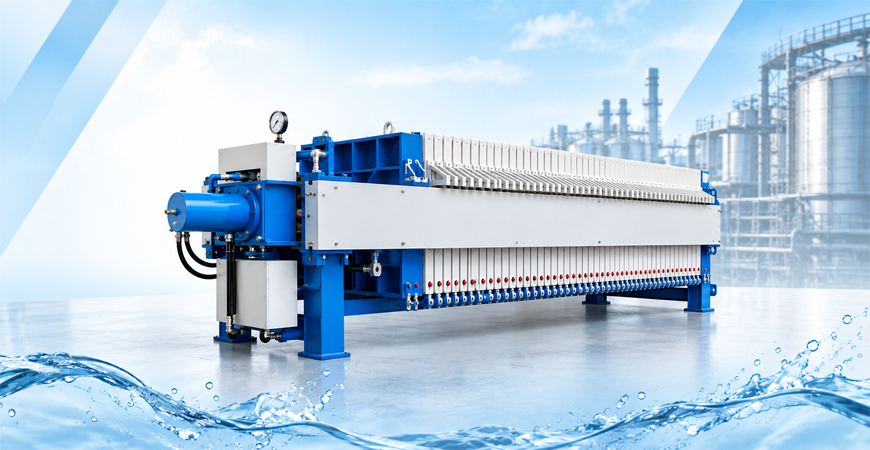
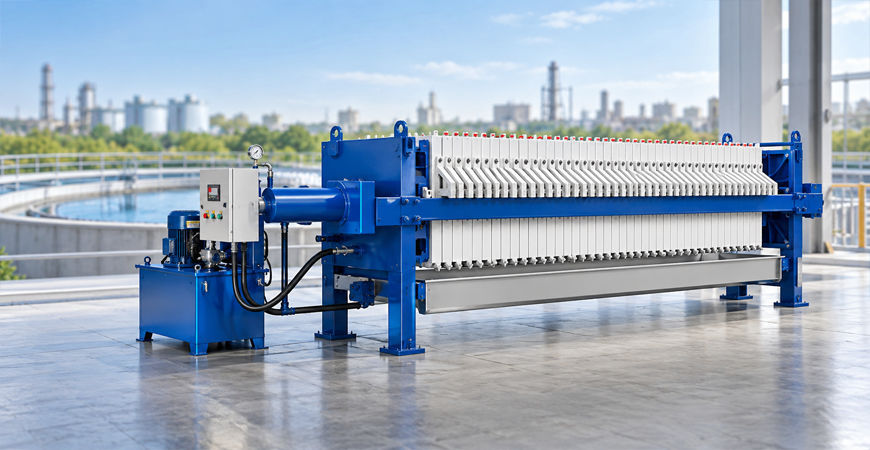
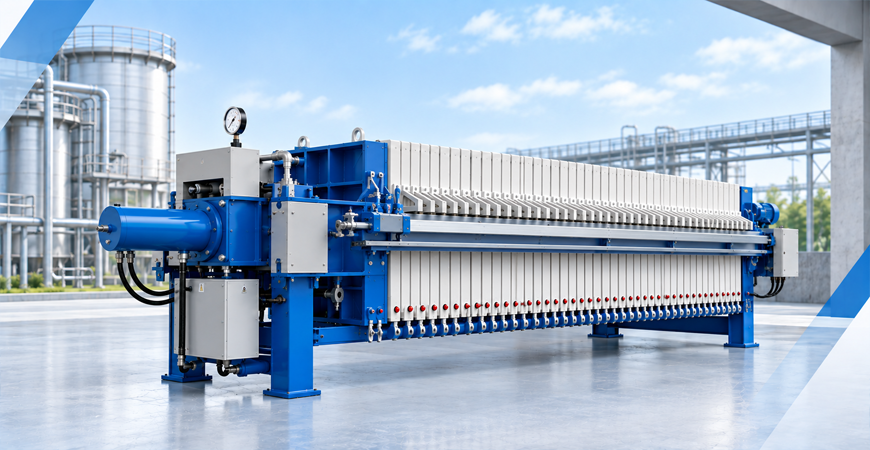
A fully automatic filter press is an industrial filtration machine that separates solids from liquids using pressure filtration and automated operating mechanisms. It typically includes filter plates, filter cloths, a hydraulic closing system, a feed pump, and automated controls.
Depending on its configuration, the machine can automate functions such as plate shifting, filter cake discharge, and filtration cycle control. This helps reduce repetitive manual work and supports consistent operation in industrial facilities.
How Does a Fully Automatic Filter Press Work?
The working principle of a fully automatic filter press is based on pressure filtration. The process generally involves the following steps:
- Automatic Plate Closing : The filter plates are pressed together to form sealed filtration chambers.
- Slurry Feeding : A pump transfers slurry into the chambers under controlled pressure.
- Solid-Liquid Separation : Liquid passes through the filter cloth, while solid particles remain inside the chambers.
- Filter Cake Formation : The accumulated solids form a filter cake as filtration continues.
- Automatic Cake Discharge : Once filtration is complete, the plates separate and the filter cake is discharged through the configured mechanism.
The system then prepares for the next cycle, depending on its automation features and operating settings.
Key Benefits of a Fully Automatic Filter Press
A fully automatic filter press offers several advantages for industrial filtration processes.
- Reduced Manual Intervention : Automated functions minimize repetitive operator tasks.
- Improved Productivity : Automation can help reduce delays between filtration cycles.
- Consistent Filtration : Controlled operating sequences support repeatable process performance.
- Efficient Sludge Dewatering : The machine removes liquid from suitable slurries, reducing the volume of wet solids.
- Better Operational Convenience : Automated plate movement and discharge can simplify routine operations.
- Potential Cost Savings : Reduced labor requirements and improved process efficiency may lower operating costs, depending on the application.
Industrial Applications of Fully Automatic Filter Press
Fully automatic filter presses are used in industries that require regular or high-volume solid-liquid separation.
- Wastewater Treatment : Used for dewatering industrial sludge and reducing its volume for handling and disposal.
- Chemical Industry : Helps separate solids from chemical mixtures and recover process materials.
- Mining Industry : Supports dewatering of suitable mineral concentrates and tailings.
- Textile Industry : Used to dewater sludge generated during textile wastewater treatment.
- Ceramic Industry :Helps separate water from suitable ceramic slurries.
- Manufacturing Industry : Supports filtration processes that generate solid residues or require liquid recovery.
The machine configuration should be selected according to the slurry characteristics, filtration capacity, and process requirements.
How to Choose the Right Fully Automatic Filter Press
Before selecting a fully automatic filter press, consider the following factors:
- Processing Capacity : Determine the volume of slurry to be processed per cycle or per hour.
- Slurry Characteristics : Evaluate particle size, solids concentration, viscosity, and chemical properties.
- Filter Cake Moisture : Identify the required moisture level in the discharged solids.
- Automation Features : Check which functions, such as plate shifting and cake discharge, are automated.
- Maintenance Requirements :Consider filter cloth replacement, cleaning, spare parts, and servicing.
- Available Space : Ensure the equipment fits your plant layout and allows safe cake discharge.
Choosing the correct configuration helps improve filtration performance and supports reliable long-term operation.
Frequently Asked Questions (FAQs)
It is used to separate solids from liquids in applications such as wastewater treatment, chemical processing, mining, and industrial sludge dewatering.
An automatic model can perform selected operations, such as plate shifting and cake discharge, with reduced manual intervention. The exact level of automation depends on the machine design.
It may reduce labor requirements and improve cycle efficiency. Actual savings depend on the application, energy consumption, maintenance, and operating conditions.
Slurry composition, particle size, feed pressure, filter cloth selection, filtration time, and machine configuration all influence performance.
Conclusion
A fully automatic filter press is an effective solution for industrial solid-liquid separation where automation, operational consistency, and reduced manual handling are important. Its ability to automate selected filtration operations makes it suitable for a wide range of industrial applications.
Maruti Filtration Systems Pvt. Ltd. offers filtration equipment solutions for industrial requirements. Contact the team to discuss your application and identify a suitable filter press configuration for your facility.